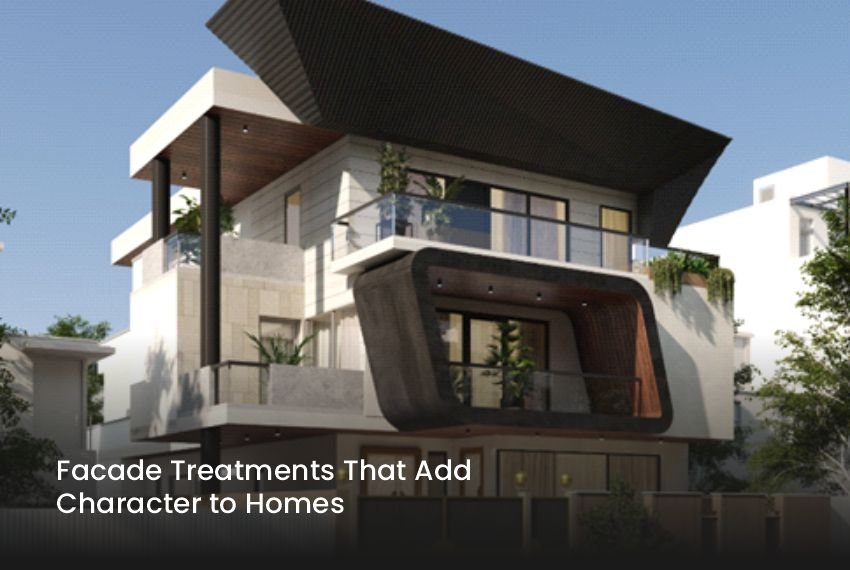
Facade Treatments That Add Character to Homes
In residential architecture, the façade is more than just the exterior skin of a building, it is the personality of the house. It is the first interaction a home has with the street, the neighborhood, and its visitors. A well-designed façade can instantly communicate style, history, warmth, and identity.
For young architects, façade design is an exciting opportunity to experiment with materials, proportions, textures, and architectural language. Even subtle treatments can transform a simple structure into a home with strong character and presence. Some treatments that can make a façade tell its story is discussed ahead.
Layering with Materials
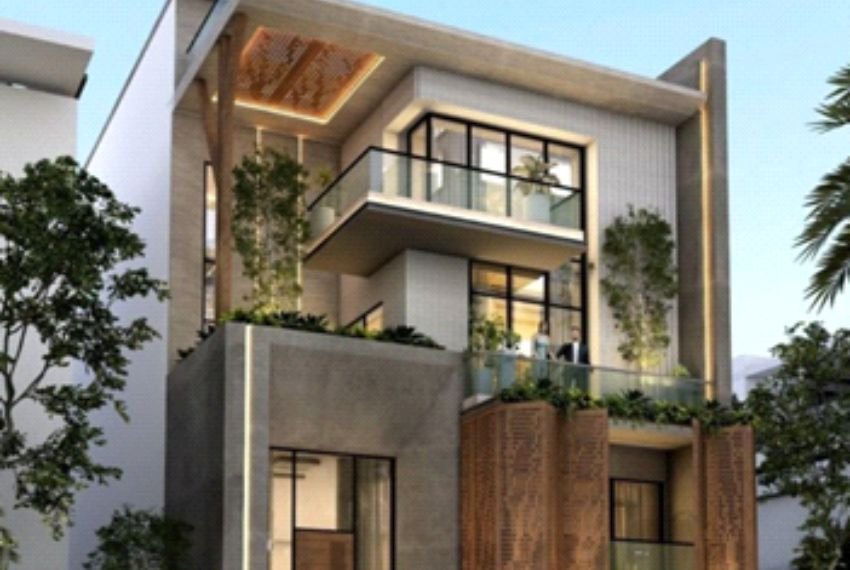
One of the simplest ways to add depth and character is through material layering. Instead of relying on a single surface finish, combining materials can create visual richness.
For example, pairing natural stone with plaster, brick with wood, or concrete with metal accents can instantly break monotony and highlight architectural elements like entrances, balconies, or vertical volumes.
- Material layering works best when it:
- Highlights key architectural features
- Maintains a balanced colour palette
- Uses texture contrast rather than excessive ornamentation
A good façade doesn’t necessarily need more materials- it needs the right materials in the right proportions.
Playing with Depth and Projections
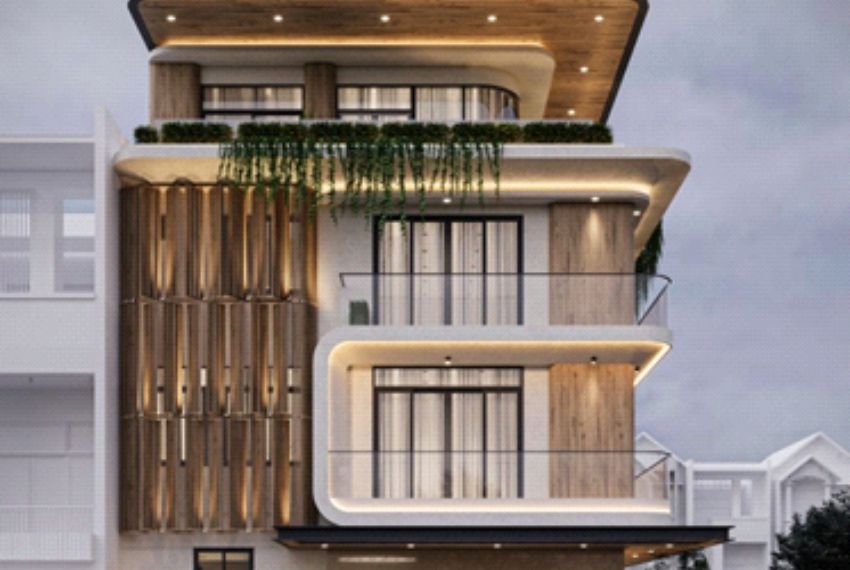
Flat façades often lack visual interest. Introducing depth through projections and recesses can create shadows that change throughout the day, making the elevation more dynamic.
Common techniques include:
- Projected balconies
- Recessed windows
- Cantilevered boxes
- Framed entrances
These elements not only improve the aesthetics but also serve functional roles like shading and spatial hierarchy.
Classical and Neo-Classical Elements
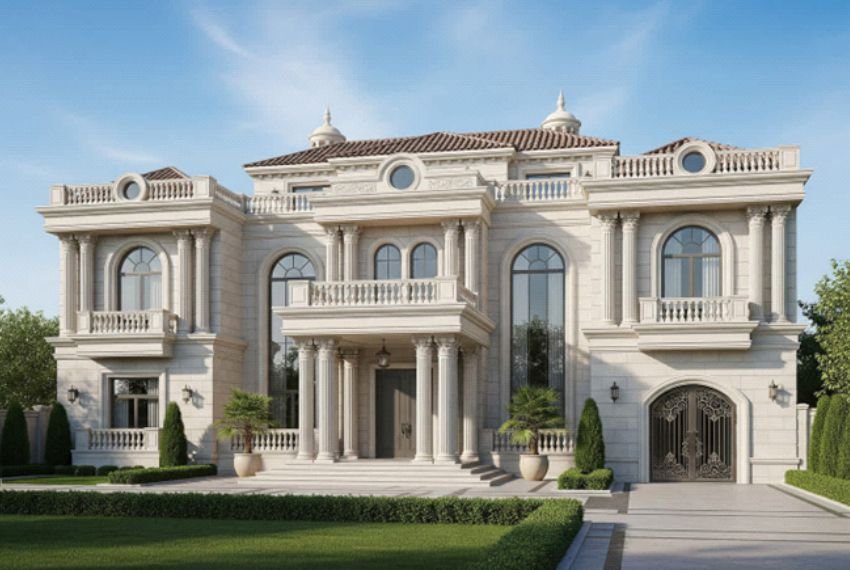
For clients who prefer timeless elegance, classical elements can add a sense of grandeur and heritage.
Inspired by traditional European architecture, treatments may include:
- Columns and pilasters
- Cornices
- Pediments
- Symmetrical window compositions
The key is restraint. Overusing classical elements can make a façade feel heavy or outdated. But when used thoughtfully, they create a refined and stately character.
Green Facades
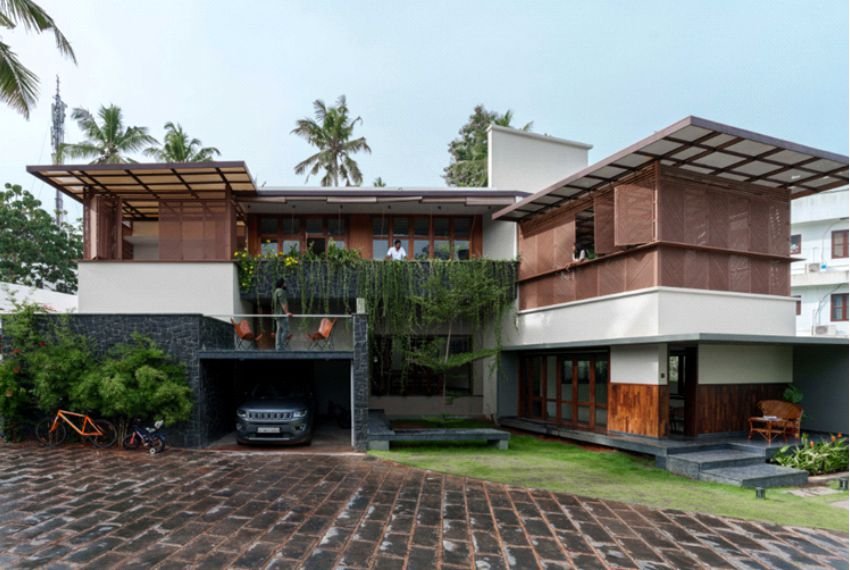
As sustainability becomes central to architecture, green façades are gaining popularity in residential design. These can include:
- Climbing plants on trellises
- Vertical gardens
- Planter-integrated balconies
- Green screens
Apart from aesthetic appeal, green façades also help with:
- Temperature regulation
- Air quality improvement
- Visual softness in dense urban areas
They bring a sense of life and freshness to homes, especially in concrete-heavy neighborhoods.
The Takeaway for Young Architects
A compelling façade is not about decoration – t is about storytelling through architecture.
Before designing the façade, ask yourself:
- What character should the home express?
- How does it relate to the surroundings?
- What materials suit the climate and context?
- How will light interact with the building throughout the day?
When façade treatments are used thoughtfully, even a simple house can become memorable and distinctive!
For young architects, mastering façade design is about learning to balance creativity, proportion, material honesty, and context.
Because at the end of the day, the façade is not just what people see – it is how the home introduces itself to the world! schedule a free consultation