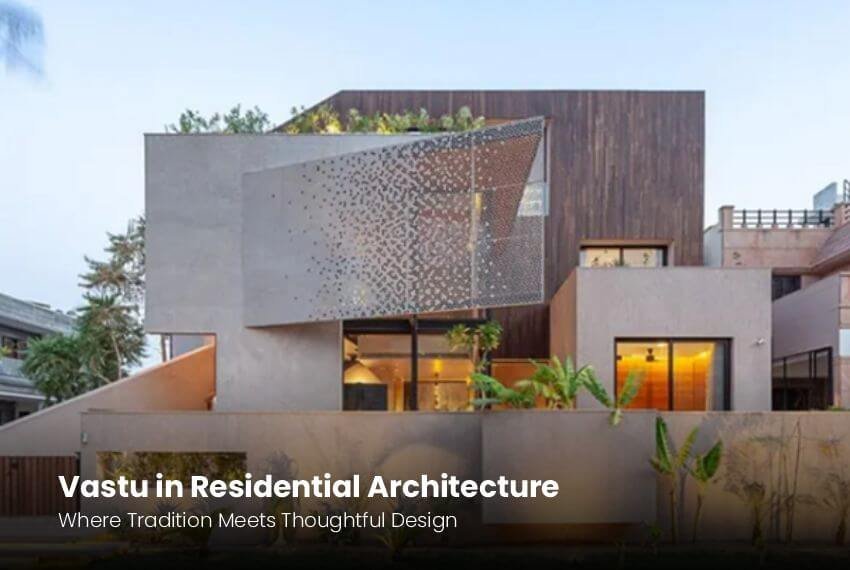
Vastu in Residential Architecture: Where Tradition Meets Thoughtful Design
In residential architecture, a home is never just a physical structure; it is a space that holds emotions, routines, and aspirations.
In the Indian context, Vastu continues to play a significant role in shaping how homes are designed and experienced. Far from being a rigid set of rules, Vastu, when understood correctly, can become a powerful design framework that aligns space, energy, and lifestyle.
Vastu is an ancient Indian science of spatial planning rooted in the relationship between humans, nature, and the five elements-earth, water, fire, air, and space. While it is often reduced to do’s and don’ts, true Vastu is about balance, orientation, and flow.
In residential architecture, Vastu focuses on how sunlight, wind, movement, and functions interact within a home. When these aspects are thoughtfully integrated, they naturally enhance comfort, health, and well-being
Orientation: The Foundation of Vastu Design
One of the core principles of Vastu lies in orientation. The placement of spaces in relation to cardinal directions influences light quality, ventilation, and thermal comfort.
- Living areas are ideally positioned to receive ample daylight, creating vibrant and welcoming spaces.
- Bedrooms are planned to promote rest and privacy, away from excessive noise and harsh sunlight.
- Kitchens are aligned to support safety, hygiene, and efficient workflow.
- Bathrooms and services are placed to ensure hygiene without disrupting the home’s energy balance.
When architects integrate these principles early in the planning stage, Vastu becomes seamless rather than restrictive.

Vastu as a Design Tool, Not a Constraint
A common misconception is that Vastu limits creativity. In reality, it encourages thoughtful zoning and clarity of function. For architects, Vastu can act as a guiding layer, much like climate responsiveness or sustainability, rather than a rulebook.
Modern residential architecture often adapts Vastu principles through:
- Flexible layouts that respect directional intent
- Open plans that enhance airflow and visual continuity
- Strategic placement of openings for natural light and ventilation
- Minimal structural alterations with maximum spatial efficiency
This approach allows homes to feel both culturally rooted and contemporarily designed.
Integrating Vastu in Modern Homes
Today’s urban homes face constraints such as compact plots, high-rise living, and regulatory limitations. Yet, Vastu can still be meaningfully integrated through smart design decisions.
- For apartments and villas alike, architects can work with:
- Furniture planning to reinforce spatial balance
- Material choices that enhance warmth and grounding
- Landscape elements such as courtyards, balconies, and terraces
- Light and color palettes that influence mood and perception
Rather than forcing compliance, these subtle integrations help maintain harmony without compromising aesthetics!
The Psychological Impact of Vastu-Aligned Spaces
At its core, Vastu influences how people feel within a space. Homes designed with clear zoning, good daylight, ventilation, and uncluttered circulation naturally promotes calmness and clarity.
Whether one believes in the metaphysical aspect of Vastu or not, its principles often align with good architectural practices. A well-ventilated, sunlit, and logically planned home will always feel more comfortable and balanced!
Interestingly, many Vastu principles overlap with sustainable design. Orientation-based planning reduces energy consumption, natural ventilation improves indoor air quality, and respect for site conditions minimizes environmental impact.
When combined, Vastu and sustainability can create homes that are not only energetically balanced but also environmentally responsible.
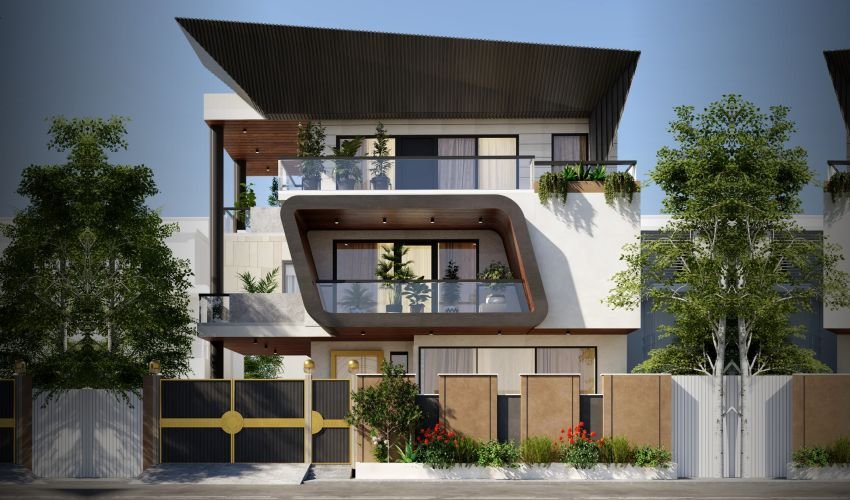
For Budding Architects
Vastu in residential architecture is not about superstition; it is about sensitivity. When interpreted with architectural intelligence, it becomes a tool that enhances spatial quality, comfort, and emotional well-being.
For modern homes, the true success lies in striking a balance: respecting traditional wisdom while embracing contemporary lifestyles.
When architecture achieves this harmony, a house transforms into a home.
Home that feels right, functions well, and stands the test of time