
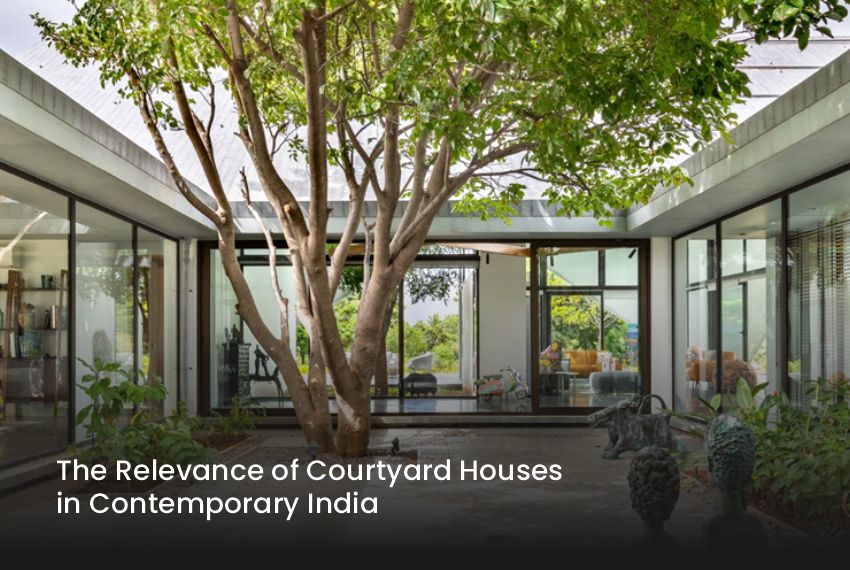
The Relevance of Courtyard Houses in Contemporary India
In an era of glass towers and compact urban apartments, the idea of a courtyard house may seem like a relic of the past. Yet, across India, architects are increasingly rediscovering the courtyard as a powerful design element that responds beautifully to climate, culture, and contemporary lifestyles.
For young architects, the courtyard is not just a nostalgic reference to traditional homes- it is a timeless spatial strategy that can solve many challenges of modern residential design.
The Courtyard: A Space Rooted in Indian Tradition
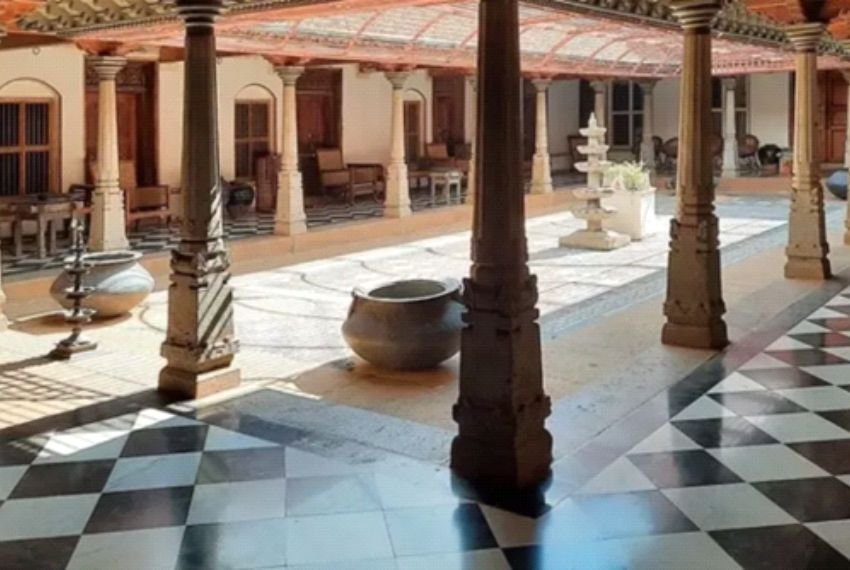
Courtyards have been a defining feature of Indian homes for centuries. From the havelis of Rajasthan to the Chettinad mansions of Tamil Nadu, the central courtyard served as the heart of domestic life.
It was a place where families gathered, children played, rituals were performed, and daily activities unfolded under the open sky. The courtyard acted as a transitional space between indoors and outdoors, blurring the boundaries between architecture and nature.
But beyond cultural symbolism, courtyards were also an intelligent climatic response.
Climate Responsiveness: Passive Cooling at Its Best
India’s traditional courtyard houses were inherently sustainable long before sustainability became a buzzword. The courtyard works as a natural ventilation system. Warm air rises through the open space while cooler air flows in from surrounding rooms, creating continuous air movement. This phenomenon helps regulate indoor temperatures, particularly in hot climates.
Additionally:
- The courtyard allows daylight to penetrate deep into the house
- Shaded verandahs around the courtyard reduce heat gain
- Plants and water elements can further cool the microclimate
In a country where extreme summers are becoming more intense, the courtyard offers a passive design solution that reduces dependence on mechanical cooling.
Bringing Nature Back into Urban Homes
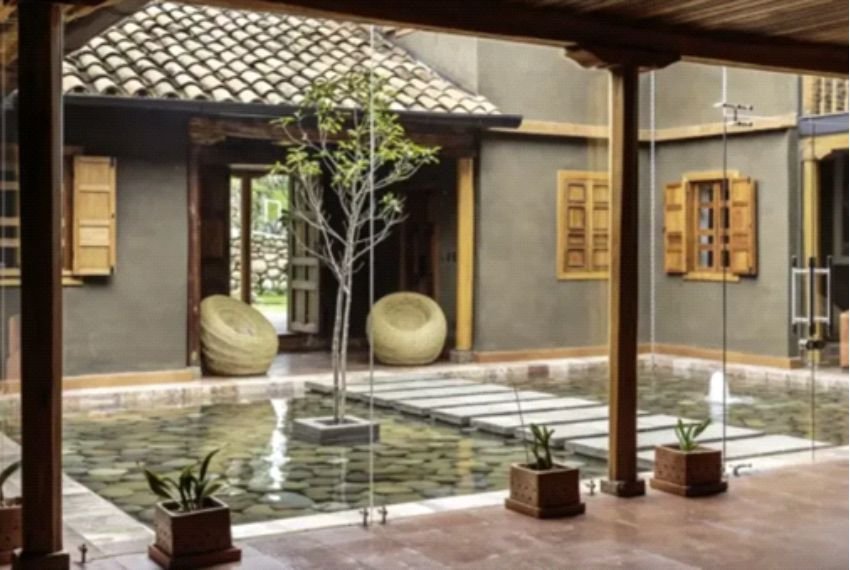
Contemporary Indian cities often suffer from dense construction, limited open spaces, and poor natural ventilation. Courtyards offer a way to bring light, air, and greenery into the center of the home even on relatively compact plots.
A courtyard can function as:
- A green oasis within the house
- A visual focal point connecting different spaces
- A private outdoor area shielded from the street
For homeowners seeking tranquility within bustling cities, the courtyard becomes a quiet retreat embedded within architecture.
Enhancing Spatial Experience
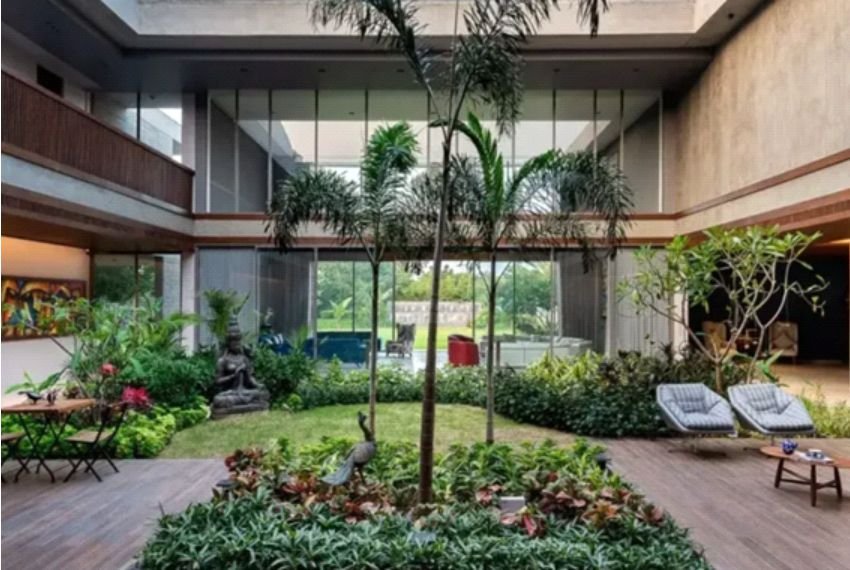
From an architectural perspective, courtyards create powerful spatial experiences. They introduce layers of movement, framed views, and changing light conditions throughout the day.
Spaces around a courtyard often feel more dynamic because they interact with the open void at the center.
For example:
- Living rooms may open directly into the courtyard
- Circulation corridors can overlook it
- Bedrooms may enjoy private views into the landscaped core
- This spatial organization fosters visual connectivity across the home, making even large houses feel more cohesive.
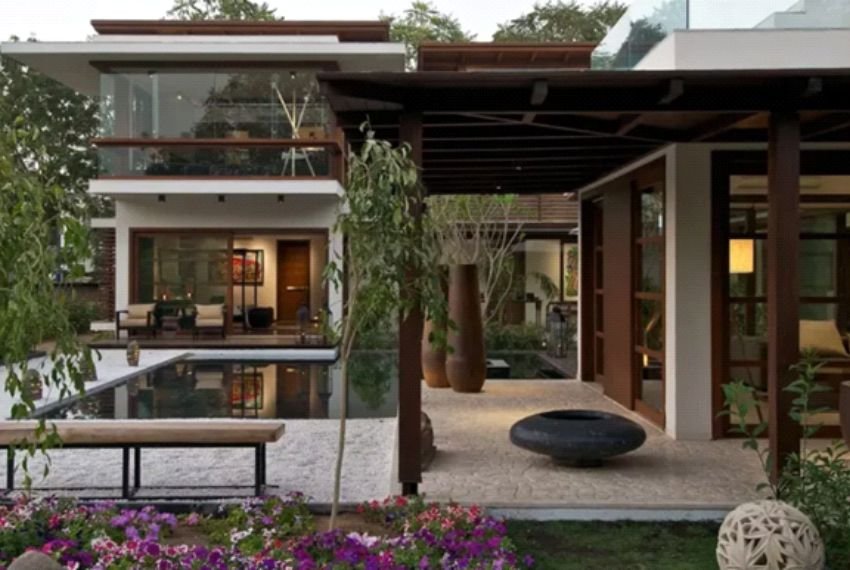
Contemporary Interpretations of Courtyard Design
Modern courtyard houses are no longer limited to traditional layouts. Architects today reinterpret the concept in innovative ways.
Some contemporary approaches include:
- Multiple smaller courtyards distributed across the house
- Linear courtyards that act as light wells
- Double-height courtyards that enhance spatial drama
- Glass-walled courtyards that visually connect interior spaces
Even compact homes can incorporate micro-courtyards or light courts that perform similar climatic and spatial roles.
The essence of courtyard design lies not in replicating tradition, but in adapting its principles for modern contexts
A Timeless Idea for the Future
As India’s cities grow denser and environmental concerns become more pressing, the courtyard is proving to be more relevant than ever.
It represents a rare architectural solution that simultaneously addresses:
- Climate responsiveness
- Cultural continuity
- Spatial richness
- Well-being and connection to nature
For young architects, exploring courtyard-based design is an opportunity to blend traditional wisdom with contemporary creativity.
Planning a home that embraces natural light and ventilation? Get a free design consultation“