
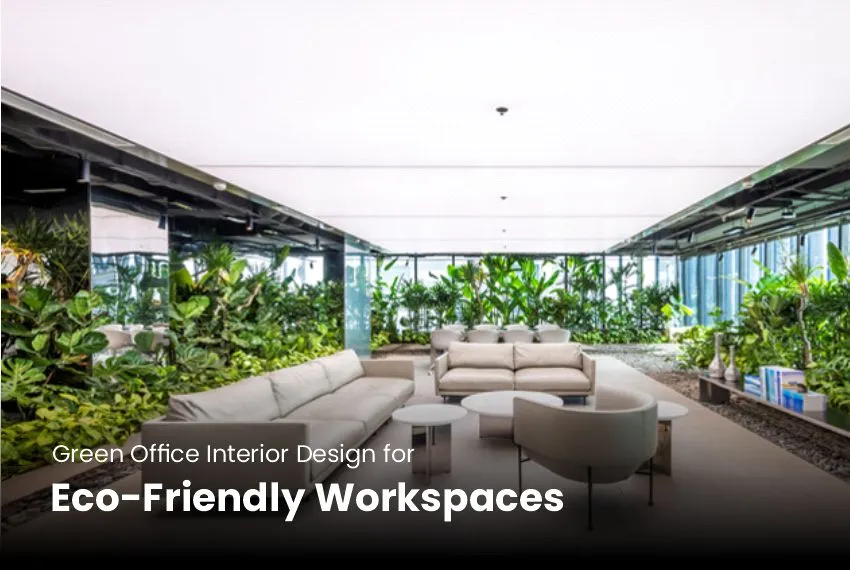
Green Office Interior Design for Eco-Friendly Workspaces
The modern workplace has evolved far beyond rows of desks and enclosed cabins. As organizations rethink how people work, office design is increasingly centered around creating environments that promote productivity, well-being, and environmental responsibility. Green office interiors are no longer a niche concept reserved for environmentally conscious brands -they have become a defining feature of progressive workplaces.
Today, sustainability is influencing every stage of workplace design, from material selection and energy efficiency to indoor air quality and flexible space planning. The result is a new generation of offices that are not only visually sophisticated but also healthier for employees and more efficient for businesses.
Why Green Office Design Matters
Buildings account for a significant share of global energy consumption and carbon emissions, making interior design an important contributor to environmental impact. While architectural interventions play a major role, interior planning has equal potential to reduce waste, improve operational efficiency, and enhance occupant comfort.
A thoughtfully designed green office delivers benefits that extend beyond sustainability. Employees experience improved air quality, greater access to natural light, reduced stress levels, and enhanced productivity. At the same time, organizations benefit from lower operational costs, stronger environmental credentials, and workspaces that attract both clients and top talent.
Sustainability is no longer just an environmental commitment-it is a strategic investment in the future of work.
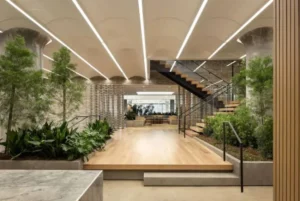
How to create green office interiors?
Prioritizing Natural Light
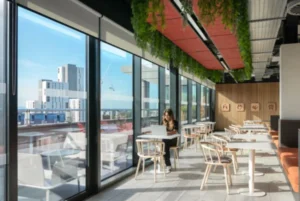
Natural daylight remains one of the most valuable resources in office design. Studies consistently associate daylight with improved mood, reduced eye strain, higher productivity, and better overall well-being.
Architects are increasingly designing workplaces that maximize daylight penetration through:
- Open floor plans
- Glass partitions instead of opaque walls
- Skylights and clerestory windows
- Light-reflective interior finishes
- Thoughtful workstation placement
Reducing dependence on artificial lighting also lowers energy consumption, making daylight both a wellness and sustainability feature.
Sustainable Materials with Lasting Value
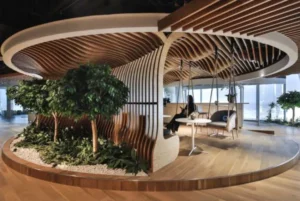
Material selection is one of the most impactful decisions in green interior design. Rather than focusing solely on aesthetics, designers now evaluate materials based on their environmental footprint, durability, maintenance requirements, and lifecycle.
Common sustainable choices include:
- Bamboo and rapidly renewable materials
- Recycled metal and glass
- Low-VOC paints and adhesives
- Cork flooring
- Reclaimed wood
- Recycled acoustic panels
- Natural stone sourced responsibly
These materials not only reduce environmental impact but also contribute warmth, texture, and authenticity to office interiors.
Energy-Efficient Lighting Solutions
Lighting plays a significant role in both workplace experience and energy consumption. Modern green offices rely on layered, energy-efficient lighting systems that respond to occupant needs throughout the day.
Sustainable lighting strategies include:
- LED fixtures with long operational life
- Occupancy sensors
- Daylight-responsive dimming controls
- Task lighting for individual workstations
- Circadian lighting systems that mimic natural daylight patterns
These solutions reduce electricity consumption while creating more comfortable and adaptable work environments.
Improving Indoor Air Quality
Healthy indoor environments are essential for employee well-being and long-term productivity. Green office interiors prioritize air quality through both design and material selection.
Key strategies include:
- Low-emission materials
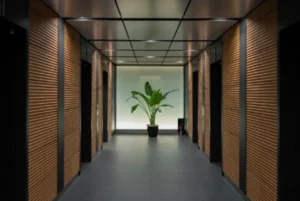
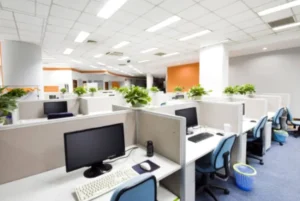
- Indoor plants that complement ventilation systems
- Advanced HVAC filtration
- Natural ventilation wherever feasible
- Moisture control to prevent mold growth
Cleaner indoor air contributes to greater occupant comfort, reduced fatigue, and fewer health-related disruptions.
The Future of Sustainable Office Interiors
Green office design is rapidly becoming the benchmark for modern workplaces. As businesses place greater emphasis on environmental responsibility and employee experience, sustainable interiors are evolving from a desirable feature into an essential design standard.
Future workspaces will increasingly combine energy-efficient technologies, adaptable layouts, renewable materials, and biophilic principles to create offices that are resilient, resource-conscious, and deeply human-centric.
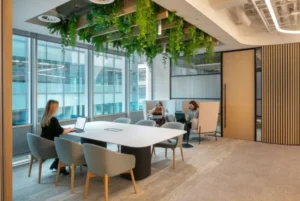
Ultimately, the most successful green offices are those that achieve a seamless balance between environmental stewardship, operational efficiency, and exceptional user experience. They demonstrate that sustainability and sophisticated design are not competing priorities-they are complementary elements of a workplace built for the future.
Add a comment